Desk Movement Break for Lower-Back Discomfort: A 15-Minute Routine
Back discomfort can have many causes. This gentle sequence is an optional movement break, not a diagnosis or treatment.
Prolonged static work and awkward postures can contribute to muscle fatigue and discomfort, but lower-back pain is not explained by one posture or one muscle pattern. Health guidance generally favors staying active and changing position when you can, provided movement does not make symptoms worse.
Below is a 15-minute routine of six stretches you can do at or beside your desk. No equipment, no gym clothes. The goal isn't a deep, painful stretch — it's easy, repeatable movement that you'll actually come back to.
Before you start
Move slowly and breathe. A stretch should feel like a mild pull, never a sharp pain. If any movement causes sharp, shooting, or radiating pain — especially pain that travels down a leg — stop and skip it. Ease off on days your back is flaring up.
The 15-minute routine
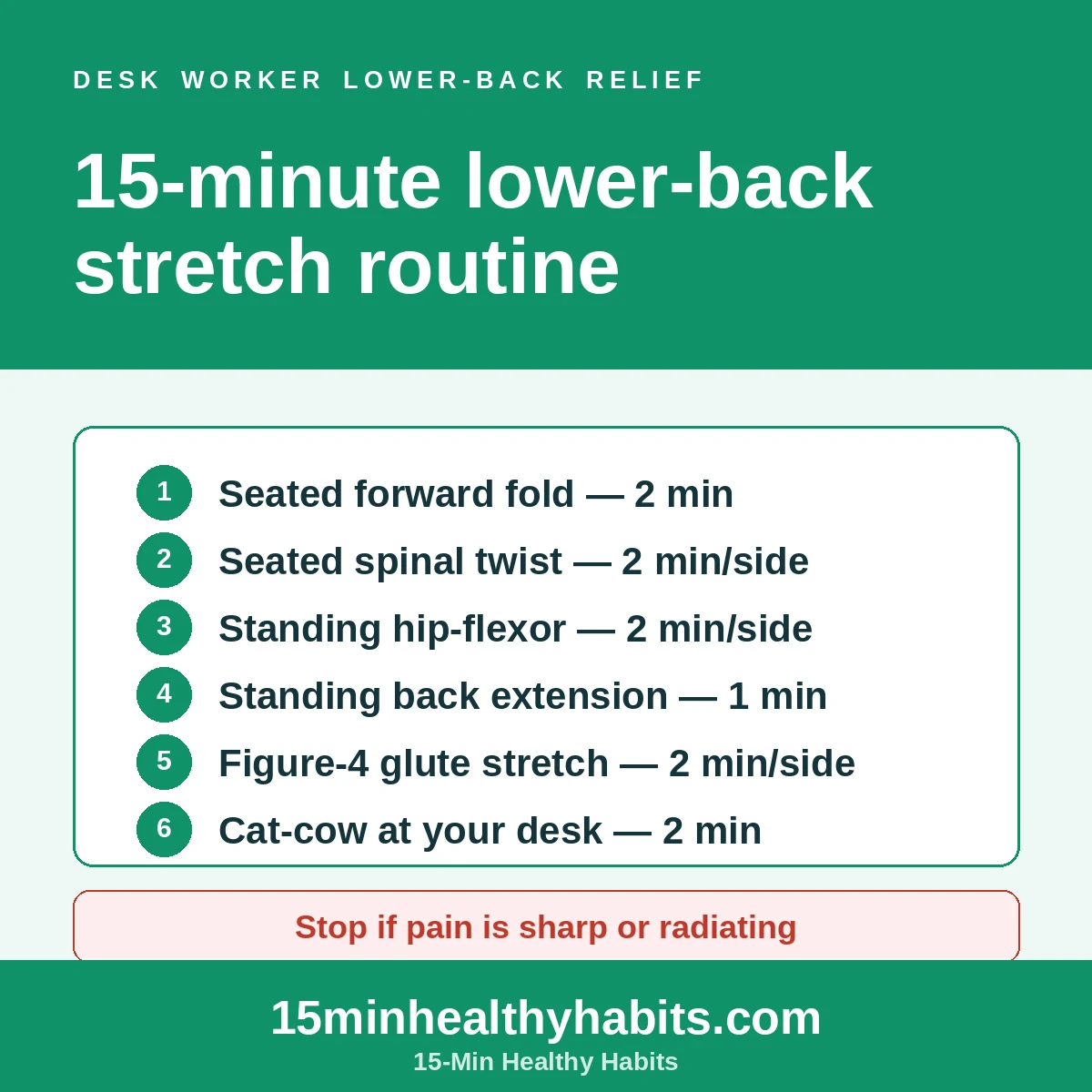
1. Seated forward fold (2 min)
Sit toward the front of your chair, feet flat. Let your chest fold gently toward your thighs and your arms hang toward the floor. Keep the range comfortable, then rise slowly.
2. Seated spinal twist (2 min, each side)
Sitting tall, place your right hand on the outside of your left thigh and gently rotate your torso to the left, using the chair back for a light assist. Keep both hips facing forward. Hold, breathe, then switch sides.
3. Standing hip-flexor stretch (2 min, each side)
Stand and step one foot back into a shallow lunge. Tuck your pelvis slightly and shift forward only until you feel a mild stretch across the front of that hip. Skip it if it increases back, hip or leg symptoms.
4. Standing back extension (1 min)
Stand tall, hands on your hips, and gently lean backward a few degrees if that direction feels comfortable. Keep it small and controlled; omit it if extension worsens your symptoms.
5. Figure-four glute stretch (2 min, each side)
Sitting, cross your right ankle over your left knee so your right knee opens outward. Sit tall and lean forward slightly until you feel a mild stretch in your right glute and outer hip. Switch sides.
6. Cat-cow at your desk (2 min)
Place your hands on your desk, step back so your arms are straight, and hinge at the hips. Alternately round and gently arch your back within a comfortable range. Move slowly with your breath.
Make it a habit, not a one-off
Use the sequence only when it feels comfortable. Short movement breaks can be easier to fit into a workday than a long session, but no fixed schedule is right for everyone. If symptoms persist, recur or limit daily activities, seek individual advice.
Build your own 15-minute routine
Want a personalized set of stretches with built-in timers? Use our free 15-minute stretch routine builder — pick your problem areas and it lays out a timed routine you can follow along with.
As an Amazon Associate, 15-Min Healthy Habits earns from qualifying purchases. Some links on this page are affiliate links — at no extra cost to you.
When to see a professional
Seek medical advice if back pain does not improve after a few weeks, interferes with daily activity, follows an injury, or is severe or worsening quickly. Get urgent help for pain, tingling, weakness or numbness in both legs, loss of feeling around the genitals or anus, or bladder or bowel changes.
Sources reviewed
This article shares general wellness information and is not medical advice. Everyone's body is different — listen to yours, and consult a qualified professional for persistent or serious pain.